

In today’s world of fitness, sports therapy, and rehabilitation, kinesiology taping has emerged as a powerful and popular method for healing and support. Whether you’re an athlete, someone recovering from an injury, or simply dealing with daily pain, this technique offers numerous benefits. So, what is kinesiology tape, and how can it help you?
This blog explores everything you need to know about kinesiology tape, including its uses, benefits, application areas, and answers to common questions like, “How does kinesiology tape work?” or “What are the effects of kinesiology tape knee applications?” Additionally, we’ll look at common queries around price, availability, and before and after cupping therapy comparisons.
What Is Kinesiology Tape?
Kinesiology tape is a stretchy, skin-friendly, adhesive tape designed to mimic the skin’s elasticity. It was developed by Dr. Kenzo Kase in the 1970s, primarily to support muscles and joints during movement without limiting range of motion.
It’s widely known by its short form, k tape, and is applied to the body in specific patterns based on the type and location of injury or strain.
Unlike rigid athletic tapes used in the past, kinesiology tape provides gentle support while also promoting healing, reducing swelling, and relieving pain.
How Does Kinesiology Tape Work?
You may wonder, “how does kinesiology tape work?” When applied properly, kinesiology tape lifts the skin slightly, which:
-
- Reduces pressure on pain receptors
-
- Improves blood and lymphatic circulation
-
- Decreases inflammation
-
- Facilitates muscle contraction and coordination
Moreover, it helps re-educate the neuromuscular system and improves posture and biomechanics. This is especially important for repetitive strain injuries or postural imbalances.
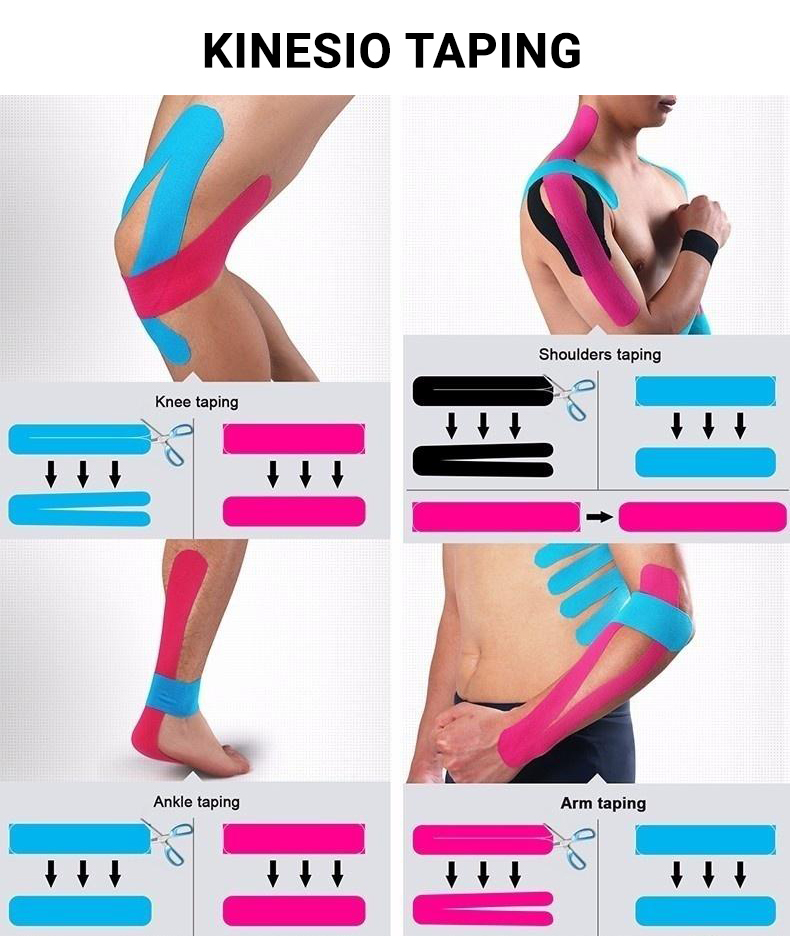
Top Kinesiology Tape Uses
The kinesiology tape uses are extensive. It is commonly used for:
-
- Muscle strain relief
-
- Joint stabilization
-
- Swelling and bruise reduction
-
- Pain management
-
- Preventing injuries
-
- Supporting posture
Additionally, it’s an excellent aid for people with conditions like arthritis, tendonitis, and fibromyalgia.
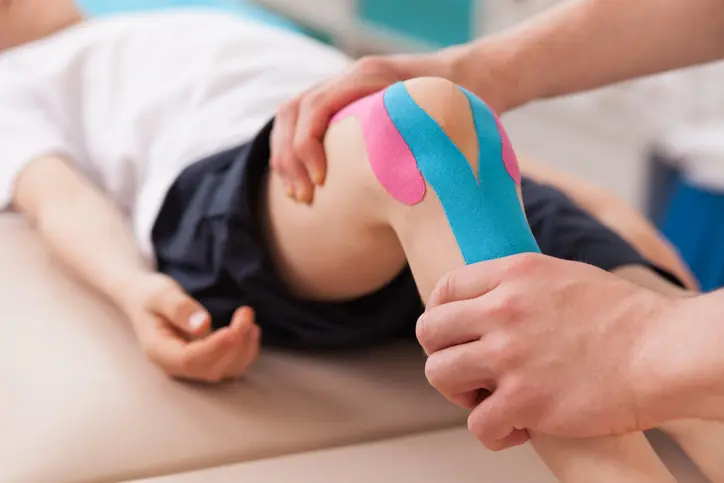
Kinesiology Tape for Knee Pain
The kinesiology tape knee application is among the most sought-after due to the knee’s vulnerability to stress and injury. It’s especially useful for:
-
- Runner’s knee
-
- ACL injuries
-
- Patellar tracking disorder
-
- Meniscal strain
By using k tape knee, you can improve alignment, reduce strain on ligaments, and prevent further damage while staying mobile.
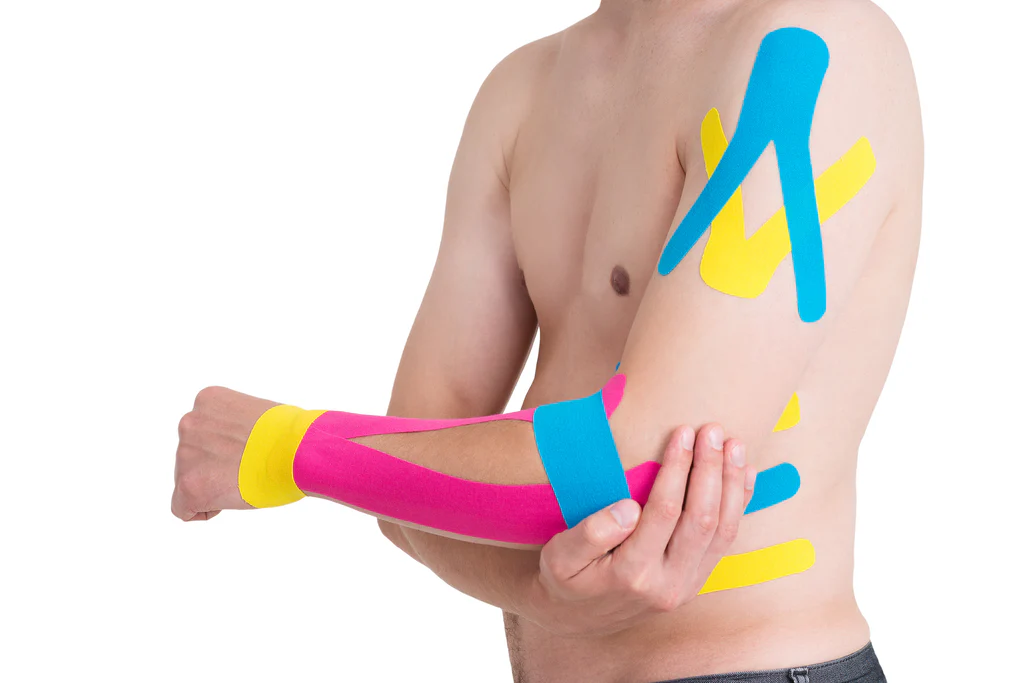
Kinesiology Tape for Shoulder Support
Similarly, kinesiology tape shoulder application can support the rotator cuff and deltoid muscles. Whether you’re lifting weights or working long hours on a desk, shoulder tension is common.
The benefits of using k tape shoulder include:
-
- Postural correction
-
- Reduced impingement
-
- Improved joint movement
-
- Decreased pain during arm motion
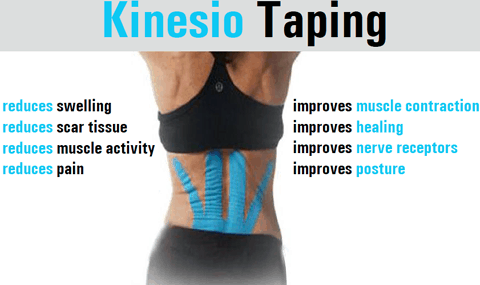
Kinesiology Tape Benefits
Let’s break down the kinesiology tape benefits further:
-
- Non-restrictive support – Encourages natural movement.2,
- Pain relief – Reduces pressure on pain sensors.3
- Reduced swelling – Helps in faster lymphatic drainage.
- Faster recovery – Supports muscles and joints without immobilizing them.
- Improved performance – Especially for athletes during competition.
- Extended wear – It can stay on for 3–5 days, even during showers or workouts.
Kinesiology Tape Price and Where to Find It
You’re probably asking, “What’s the kinesiology tape price?” Well, it varies depending on the brand and quality. In India, the cost ranges from ₹250 to ₹800 per roll.
To find “kinesiology tape near me,” check:
-
- Physiotherapy centers
-
- Sports shops
-
- Online platforms like Amazon or Flipkart
-
- Nearby pharmacies or wellness clinics
Preparation: Before and After Kinesiology Taping
Before taping:
-
- Clean and dry the skin.
-
- Remove any lotion or oil.
-
- Trim excess hair if needed.
After application:
-
- Avoid water exposure for the first hour.
-
- Don’t scratch or peel the edges.
-
- Replace tape after 3–5 days.
Understanding what to expect before and after kinesiology tape application ensures optimal results.
Safety and Side Effects
Kinesiology taping is safe for most individuals. However, some cupping therapy side effects like skin irritation can also apply to taping if the skin is sensitive.
Avoid using tape if you:
-
- Have open wounds or skin infections
-
- Are allergic to adhesives
-
- Have extremely sensitive skin
If you’re unsure, it’s wise to consult a physiotherapist or sports therapist.
Popular Poses and Exercises with Kinesiology Taping
Many people pair tape with stretches or yoga poses. One example is the cat and cow pose, which, when used alongside taping, can improve spinal mobility and reduce pain.
Also, plank exercise or crunch exercise combined with taping around the abdominal or lower back area enhances core strength and alignment.
Common Questions Answered
Q. What is kinesiology tape used for most?
A. Joint pain, muscle strain, swelling, and sports recovery.
Q. Can I apply it myself?
A. Yes, though professional guidance is advised for first-time users.
Q. How long should I wear it?
A. Usually 3 to 5 days continuously, even while sleeping or showering.
Conclusion
In conclusion, kinesiology taping is more than just a trend. It’s a clinically-backed, non-invasive method to promote healing, relieve pain, and support mobility. Whether you’re dealing with sports injuries or daily wear-and-tear, kinesiology tape uses are varied and powerful.
From managing knee pain with k tape knee applications to relieving shoulder tension with k tape shoulder, the possibilities are vast. The next time you experience discomfort, consider reaching for this elastic wonder—it may be the gentle yet effective solution you’ve been searching for.
For expert-guided application and therapy, contact Pelvispine Physiotherapy & Rehab Centre or visit our website https://pelvispine.in to book an appointment.